In Lombwa Village, Traditional Authority Khongoni, farmers are already in the fields preparing for winter cropping as the rains ease.
Land is being cleared, seeds checked, and planting plans mapped out.
Watson Samuel is among them. But this year, his usual worries about soil, rain and pests have been overtaken by a sharper concern: Will fertiliser be available and affordable?
Reports of conflict in the Middle East play on his radio as he works and he wonders what the war will mean for his small farm.
Samuel, who recently bought fertiliser for rain-fed farming, says the outlook is grim. A price spike is imminent.
“I have never benefited from government subsidy programmes,” he said. “Over the years I have done double farming, both rain-fed and winter cropping. That will be a tall order this year. Fertiliser is unaffordable for a small-scale farmer like me. It’s really hard. I hope the situation improves. Otherwise, fertiliser will remain out of reach.”
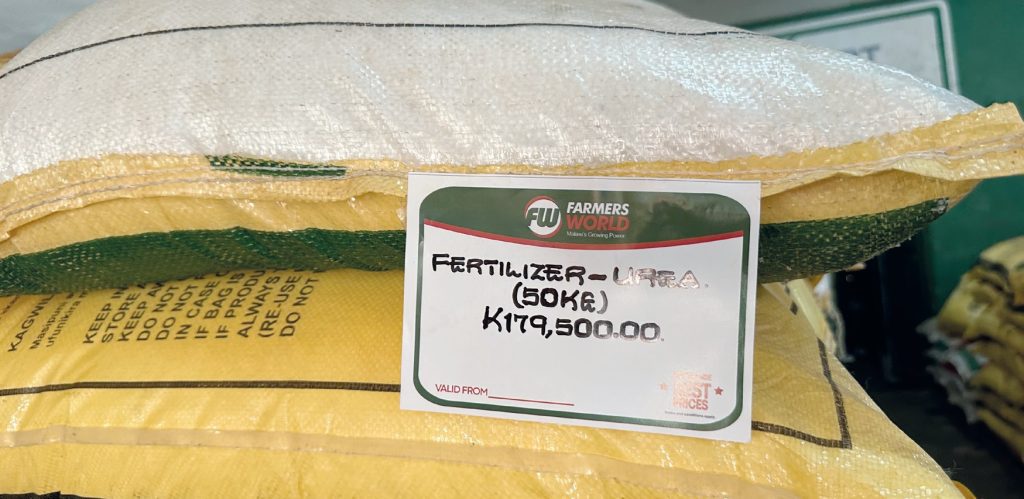
A 50kg bag of Urea that sold for K150 000 in February now fetches K185 000. NPK, previously around K160 000, is also selling at K185 000. Spot checks outside Lilongwe found prices reaching K200 000 in some areas.
As tensions disrupt food, fuel and fertiliser flows through the Strait of Hormuz, a key artery for global exports and imports, Africa’s reliance on imported synthetic inputs is once again exposed.
For many African countries, 20 to 50 percent of fertiliser supplies originate from Persian Gulf nations.
Beyond production, fossil fuels power tractors, irrigation pumps, and the trucks that move food from farms to markets.
Fertiliser Association of Malawi executive administrator Hannah Makhambera says the country faces significant price increases due to shipping disruptions through the Strait of Hormuz following the US-Israel-Iran conflict.
The route handles 35 percent of Malawi’s urea imports and 23 percent of phosphate fertilizers, including NPK, CAN and DAP.
“If the war persists, there could be a shortage,” Makhambera said.
“Disruptions in the global supply chain are increasing pressure on the commodity, resulting in rising prices globally. We are monitoring the situation and our members will take prudent steps before entering the international market to procure fertilisers.”
The Centre for Agricultural Research and Development (Card) at Lilongwe University of Agriculture and Natural Resources warns that global petroleum price spikes linked to a Middle East conflict could drive broad inflation in Malawi, with price increases jumping from 10 percent to 50 percent as the shock intensifies.
Card executive director Innocent Pangapanga, author of a recent paper Economy-Wide Impacts of Global Oil Market Disruptions on Malawi: Evidence from Middle East Conflict-Induced Fuel Price Shocks, said the impact will hit household incomes, consumption, poverty levels and hunger, especially in rural areas.
“With Middle East-driven fuel price shocks, real incomes are expected to decline, consumption to contract and poverty and food insecurity to intensify,” said Pangapanga.
He noted that poorer households face greater welfare risks due to limited coping capacity and high reliance on food consumption.
“The results highlight the regressive and welfare-reducing nature of petroleum price shocks, exacerbating existing vulnerabilities and inequalities.”
Pangapanga called for short-term measures to cushion vulnerable groups and long-term strategies including energy diversification, productivity improvements, local fertilizer blending, and stronger social protection systems.
The Food and Agriculture Organization (FAO) projects global fertiliser prices could average 15 to 20 percent higher in the first half of 2026 if the crisis continues.
FAO chief economist Máximo Torero warned last week that ongoing disruptions to the Strait of Hormuz trade corridor are triggering one of the most severe shocks to global commodity flows in recent years, with major implications for food security, agricultural production, and markets.
Ministry of Agriculture spokesperson Salome Gangire and Principal Secretary Erica Maganga had not responded to questions on interventions and preparedness by press time.
Minister of Finance and Economic Planning Joseph Mwanamvekha acknowledged the threat to food security. Speaking from the Spring Meetings of the International Monetary Fund and the World Bank, he said Malawi has appealed for help and will apply for the Rapid Response Facility to cushion economic hardships from the war.
“Because of the war, fuel, fertiliser and other essential commodities have increased in price. The World Bank agreed to help upon our application,” Mwanamvekha said.
Fertiliser Association of Malawi data shows the country uses 400 000 to 500 000 metric tonnes of fertiliser annually. Any supply shortfall hits food production directly.
In the 2024/2025 season, Malawi faced a 110 000 metric tonne fertiliser shortfall. Experts linked that deficit to a 600 000 metric tonne maize shortfall for the year.